Türkçe (TR)
 English (EN)
 العربية (AR)
Short Definition
From Historical Language
to Today's Drawing Language
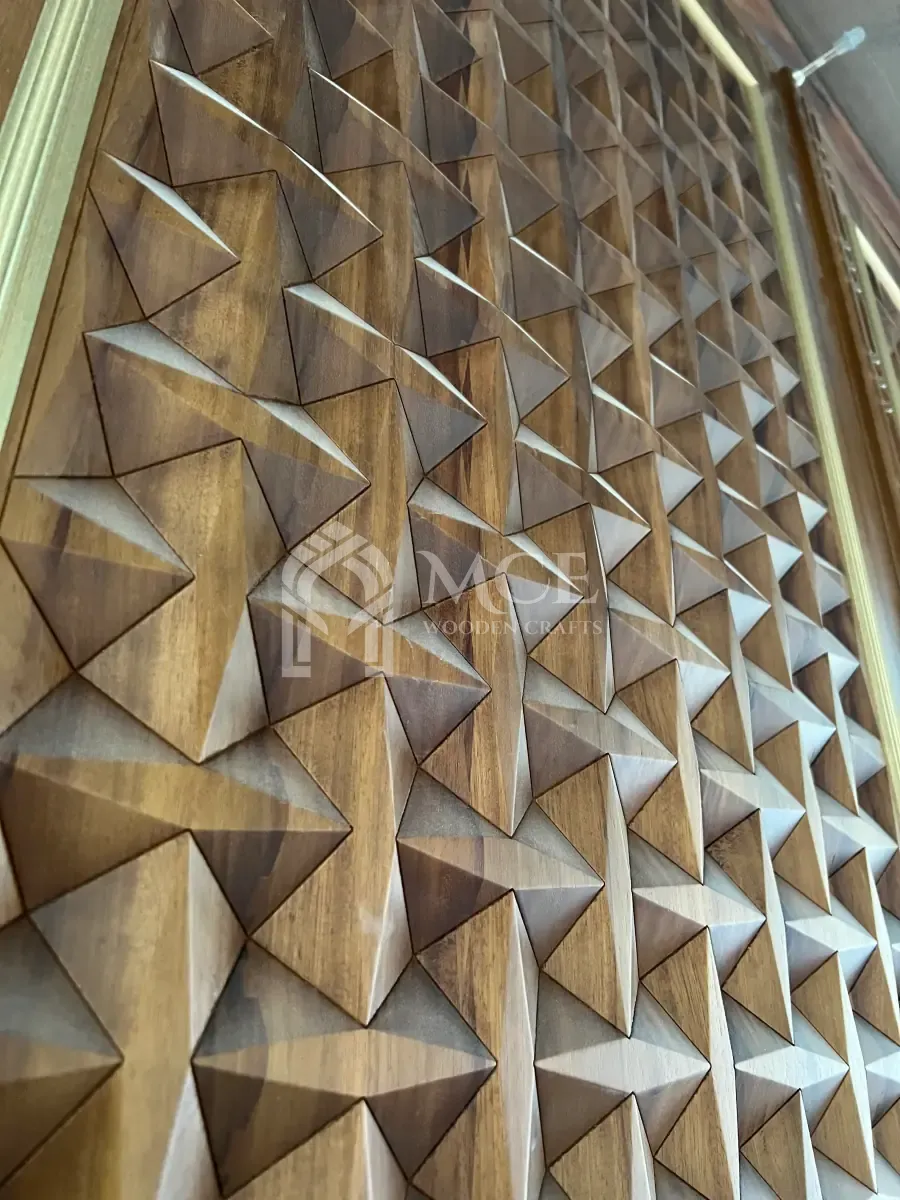
Kundekari is an art of geometric interlocking brought to wood by Seljuk and Ottoman craftsmanship: you assemble small modules together using only their interlocking forms, without nails or chemical glues. Thus, the wood does not lose its "breathing room" that allows for natural movement, and does not turn into a rigid block.
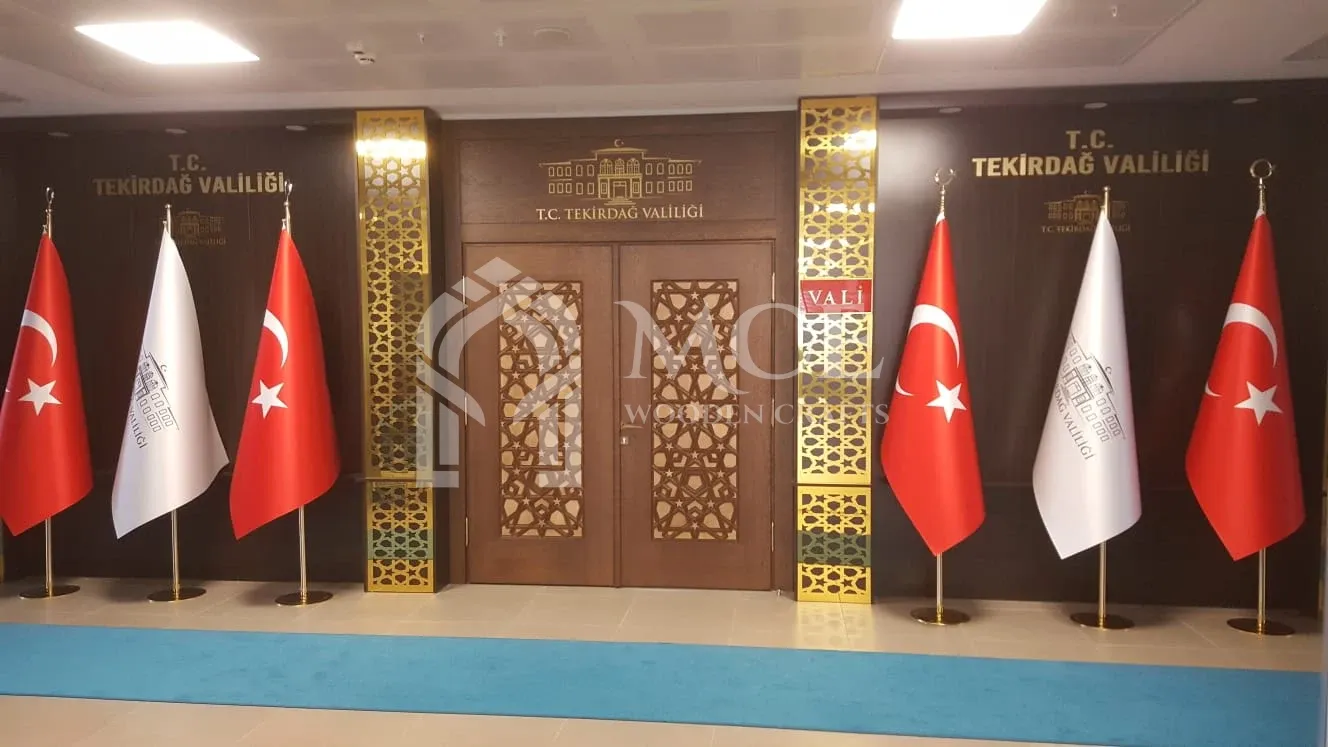
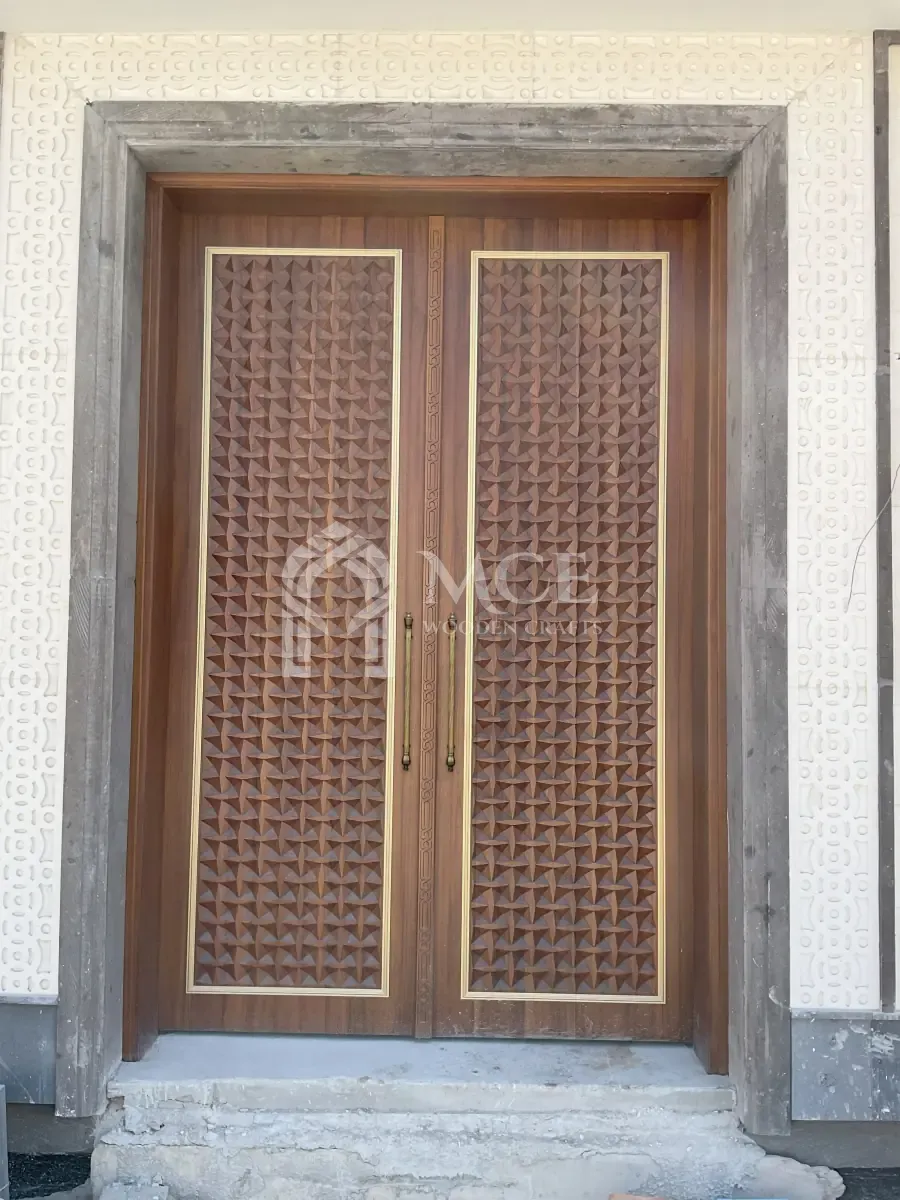
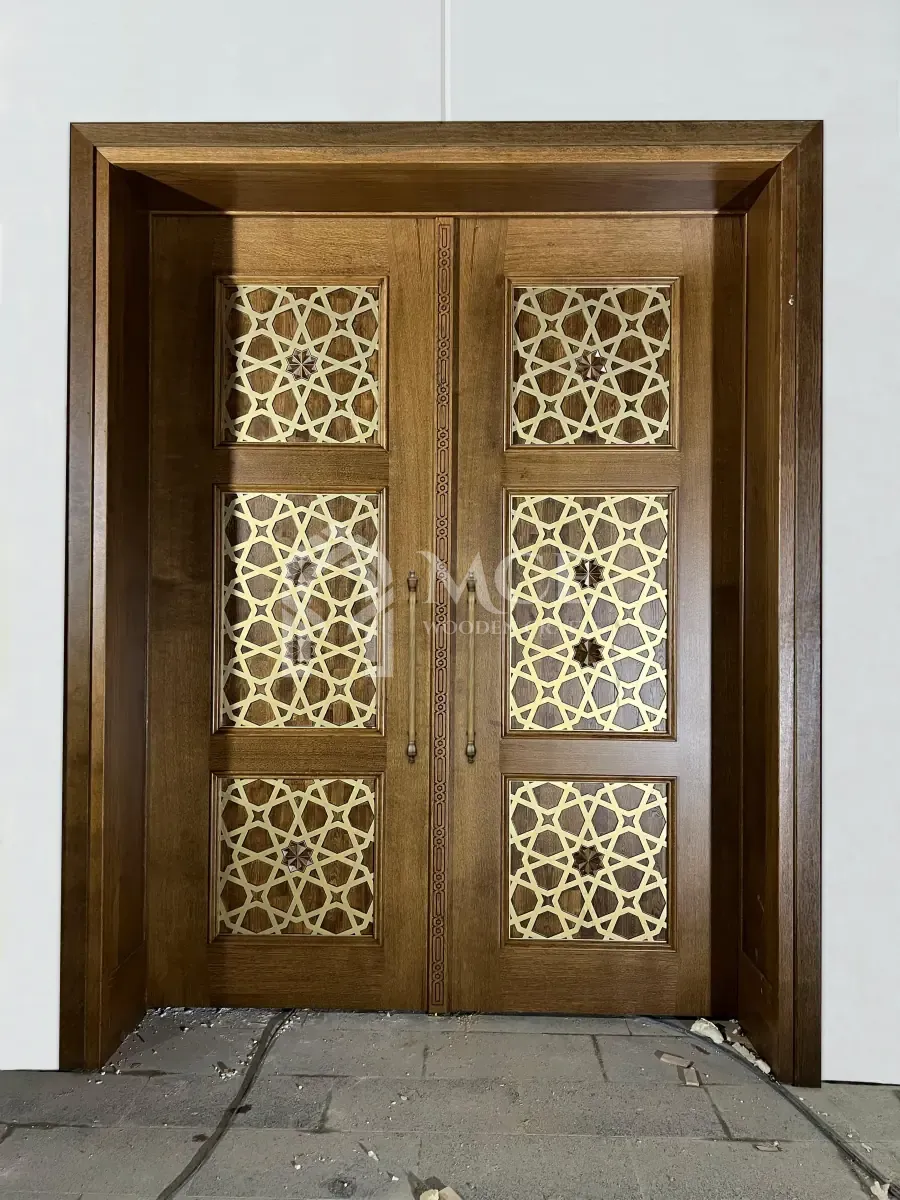
The aesthetics sought in prestigious entrances are built upon this technique: the surface, the joint line, and the light band—all bound by the same ledger of proportions. In MCE, Kundekari is completed first with the architect's vision, then the workshop batch number, and finally the opening approval on-site. The gallery below presents this language visually—the same principle, repeated across different scales.
Three Core Pillars
How Kundekari Works at MCE
Nail-Free, Glue-Free Joinery
Each piece locks into the adjacent one through its own geometry. No metal fasteners or adhesives are used; the wood's natural response to temperature and humidity is not blocked. The secret behind the surface remaining pristine for decades lies in this respectfully designed joint.
Scale and Proportion Discipline
Door height, frame, molding, light band—all proportions are solved in the drawing, recorded in the workshop book, and preserved throughout production. In Kundekari, error is measured against the drawing, not just in millimeters.
Signed Delivery
Module numbers, acceptance note, maintenance summary. The final step: signing off on the site opening when the door is opened for the first time. Thus, Kundekari transitions from a technical file into the memory of the space.
Why Still Kundekari?
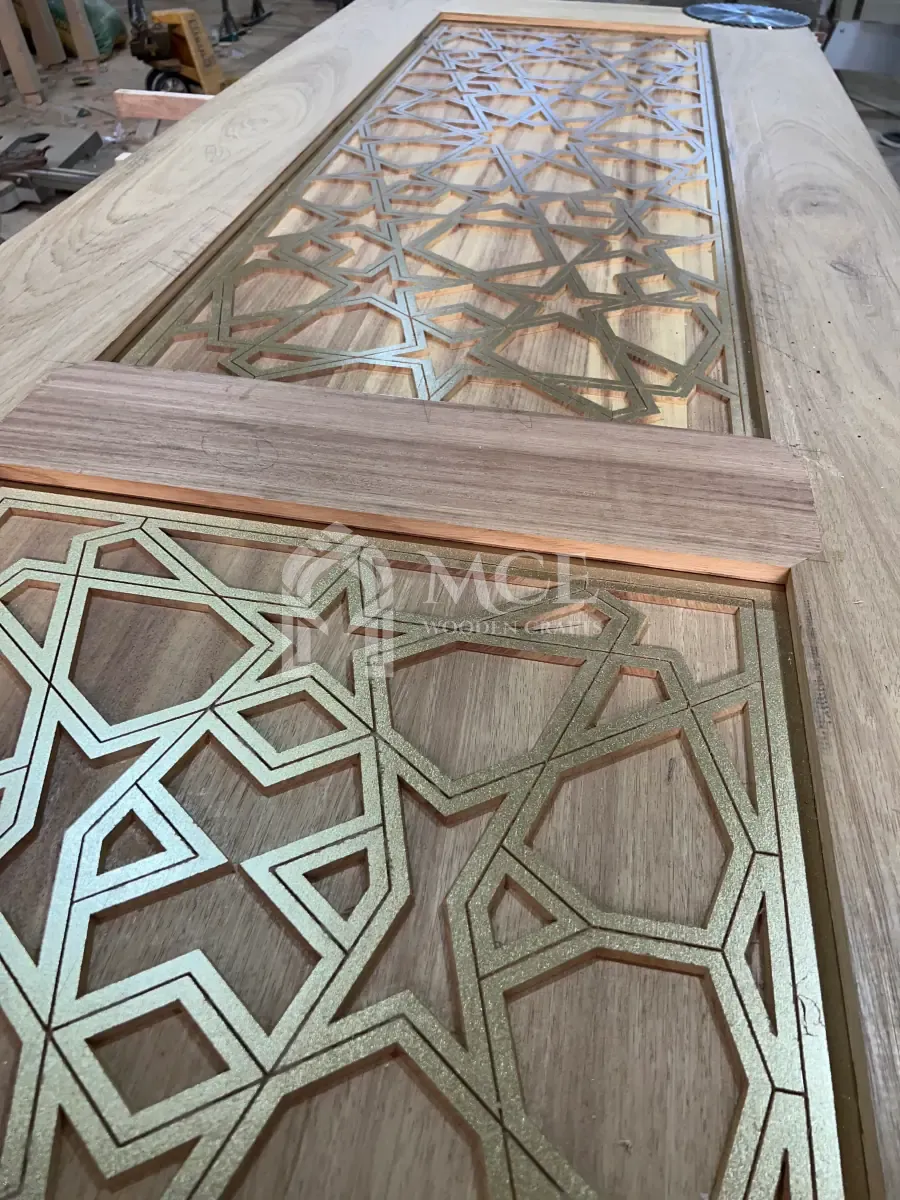
The angles of the slats and modules are not merely ornament; they are calculated for load distribution and wood movement. Therefore, the same pattern requires a new study of proportions for different heights and widths. In our workshop, every new project starts with a period dedicated to decoding the "language of the pattern".
The texture on the surface of the wood, the joint lines, and the glazed transoms cannot be considered separate from one another. A further advantage of Kundekari: in maintenance cycles, the demountable logic of the parts leaves flexibility for the owner in the long run. Thus, it is not a fading preference, but a technique designed to build a heritage.
Workshop and Site
Selected Frames Demonstrating Kundekari
.webp)