
 Türkçe (TR)
 English (EN)
 العربية (AR)
0+
Years of Experience
In Konya workshop
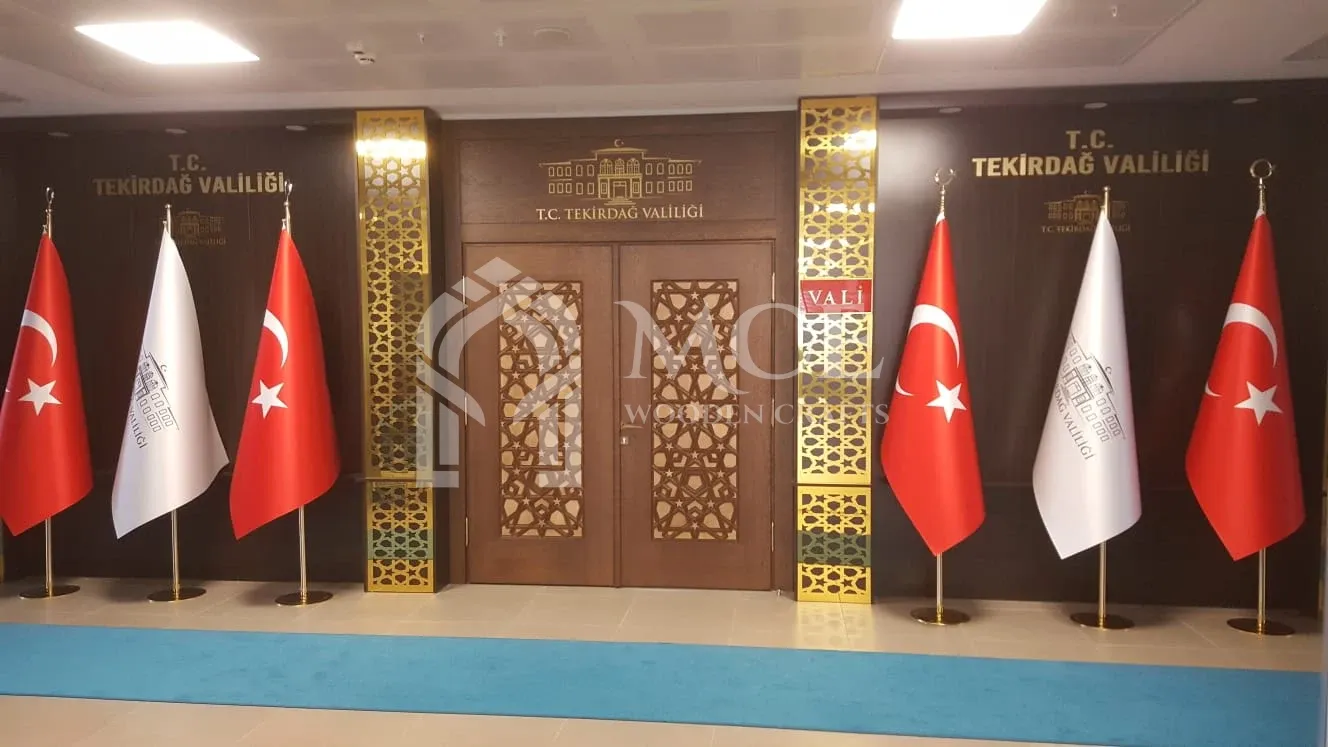
We produce custom wooden doors that bring the Kundekari tradition together with modern architecture. We work with custom designs, meticulous implementation, and a quality approach spanning years.
About UsIn Konya workshop
Custom production portfolio
Expert workshop team
International network
Custom wooden door and entrance systems designed for villas, hotels, mosques, and select prestigious projects. We share the same vision with architectural firms, builders, and investors for over 35 years; offering the ease of working with a single contact from concept to installation, and guaranteed flawless delivery across 28 countries.
Discover our craft story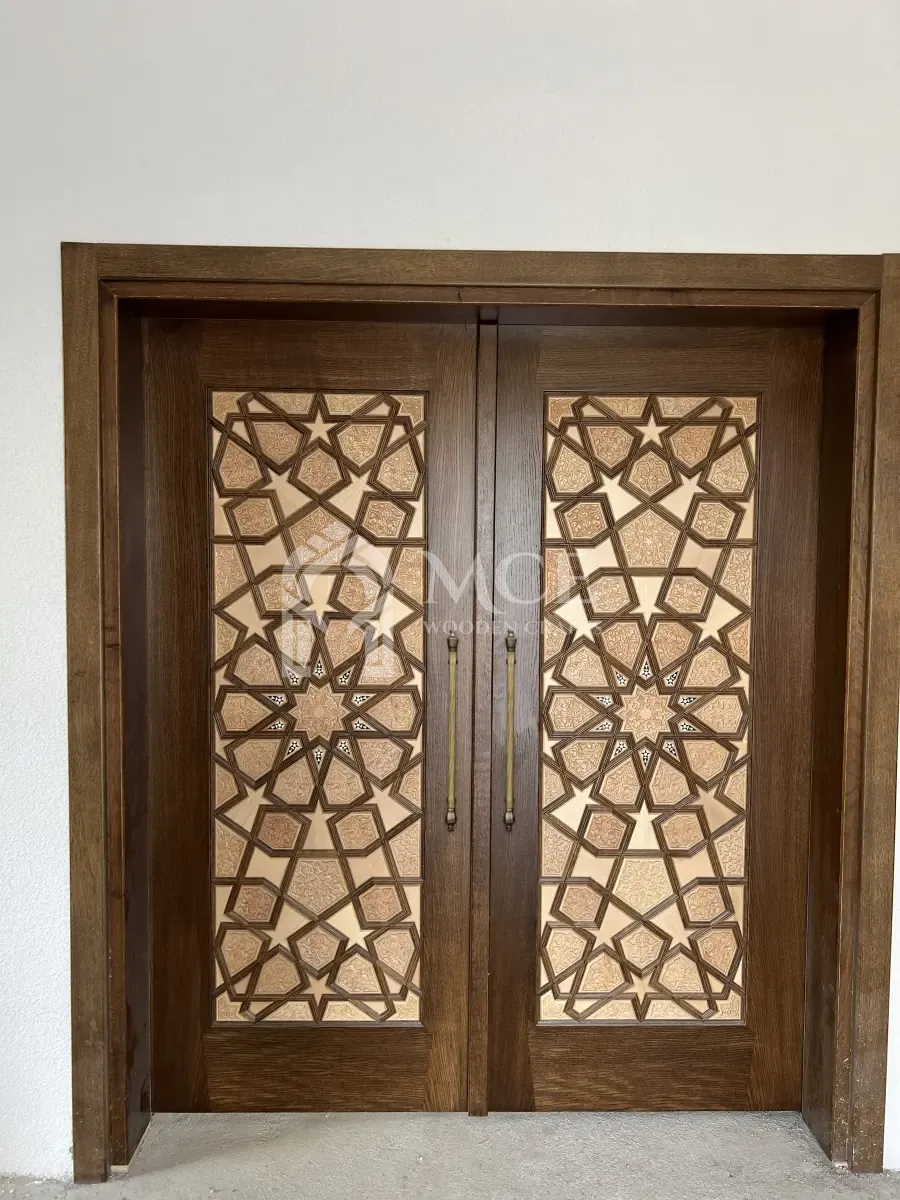
Milestones
Our 35-year chronology of craft and trust, stretching from our Konya workshop to global architectural projects from 1991 to the present.
We took our first step in our small workshop in Konya to keep the Kundekari tradition alive. We started door production adhering strictly to the nail-free and glue-free interlocking craft.
We moved to our modern workshop in Konya Karatay, increasing our capacity. We became the trusted solution partner for select architectural offices throughout Turkey.
We completed our first cross-border project and started exporting luxury doors to Europe and Gulf countries. The foundations of our logistics network spanning 28 countries were laid.
Kundekari sanatını çağdaş mimarinin gereksinimleri olan akustik, yangın dayanımı ve taşıyıcı sistem normlarıyla başarılı şekilde entegre ettik.
In our 35th year, we introduced a traceable workshop ledger system to track the history of every door. We became a global brand with our line of "quiet luxury".
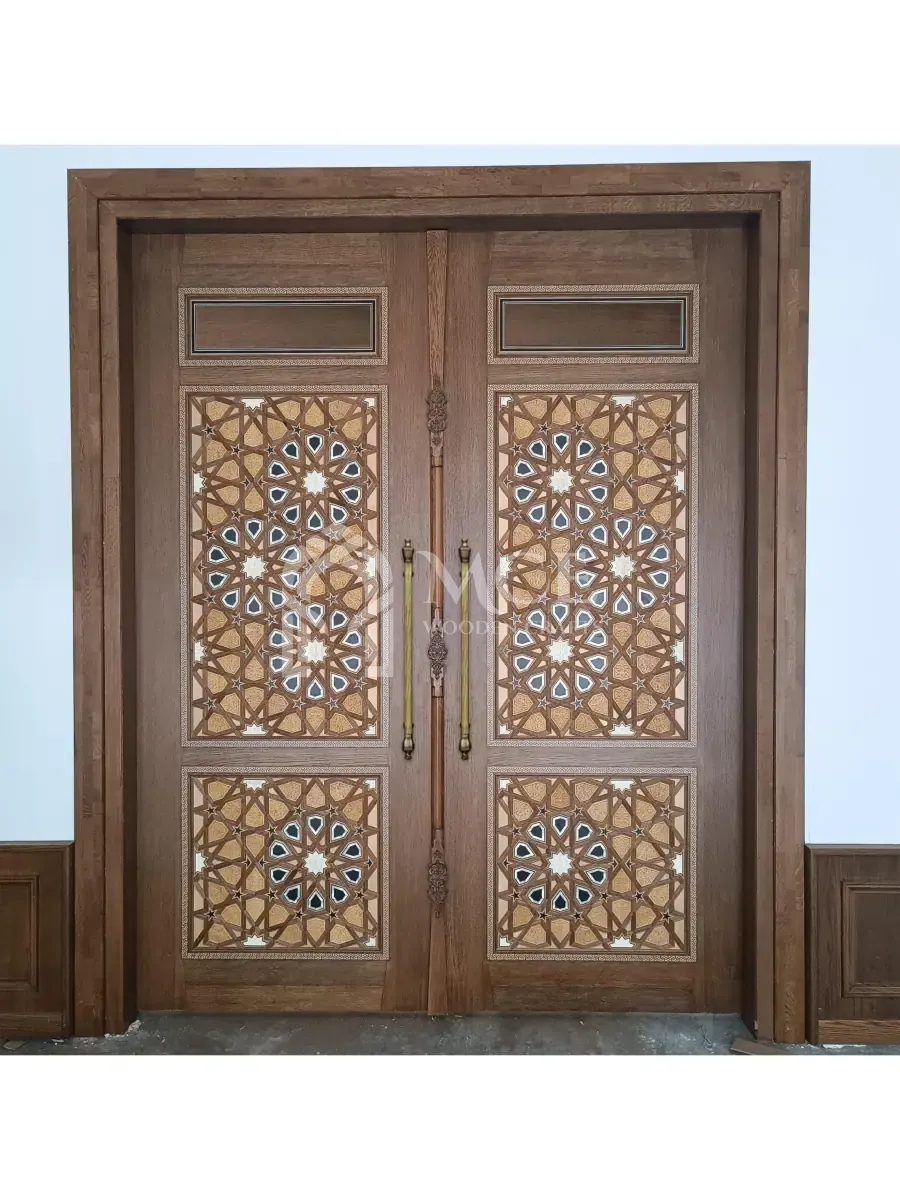
At the intersection of the art of Kundekari and modern engineering, we offer four core commitments tailored for each project: millimeter measurement precision, certified material selection, transparent process management, and durability that lasts for generations. As MCE Wooden Crafts, we guarantee all requirements of luxury architecture with a flawless standard on-site.
Uygulama
Every line of the architect on the drawing is carried to the site without being interpreted in the workshop. Digital plan reading, pre-cutting, and Kundekari hand joints meet in the same discipline; from frame to casing, whatever is in the detailed design takes its place on the door.
Walnut, oak, mahogany, and teak — each wood type is accepted into the workshop with its origin in mind. The selection, passed through the master's eye, gains the hardness and texture suitable for Kundekari after controlled drying and grain inspection. Quality is not written at the door, but on the first day of the wood.
A single project manager walking on the same table with you from sample approval to delivery signature. Production progress, shipment, and site schedule meet in the same timeline; you see every stage of the door before it leaves the workshop.
An MCE door is the first sentence of a space; also its longest-lasting sentence. The response of the wood to humidity and temperature is calculated in the workshop; with surface protection and custom maintenance consultancy for owners, the texture of the first day remains in place even as years pass.

In our workshop in Konya, the Kundekari tradition has been passed down from master hand to master hand for 35 years. Digital plan reading and precision pre-cutting only add speed to this memory; the same master eye still works on every joint, every engraving, and the final touch of the surface. The MCE signature is the name of this balance where craft and technology walk together without overpowering one another.
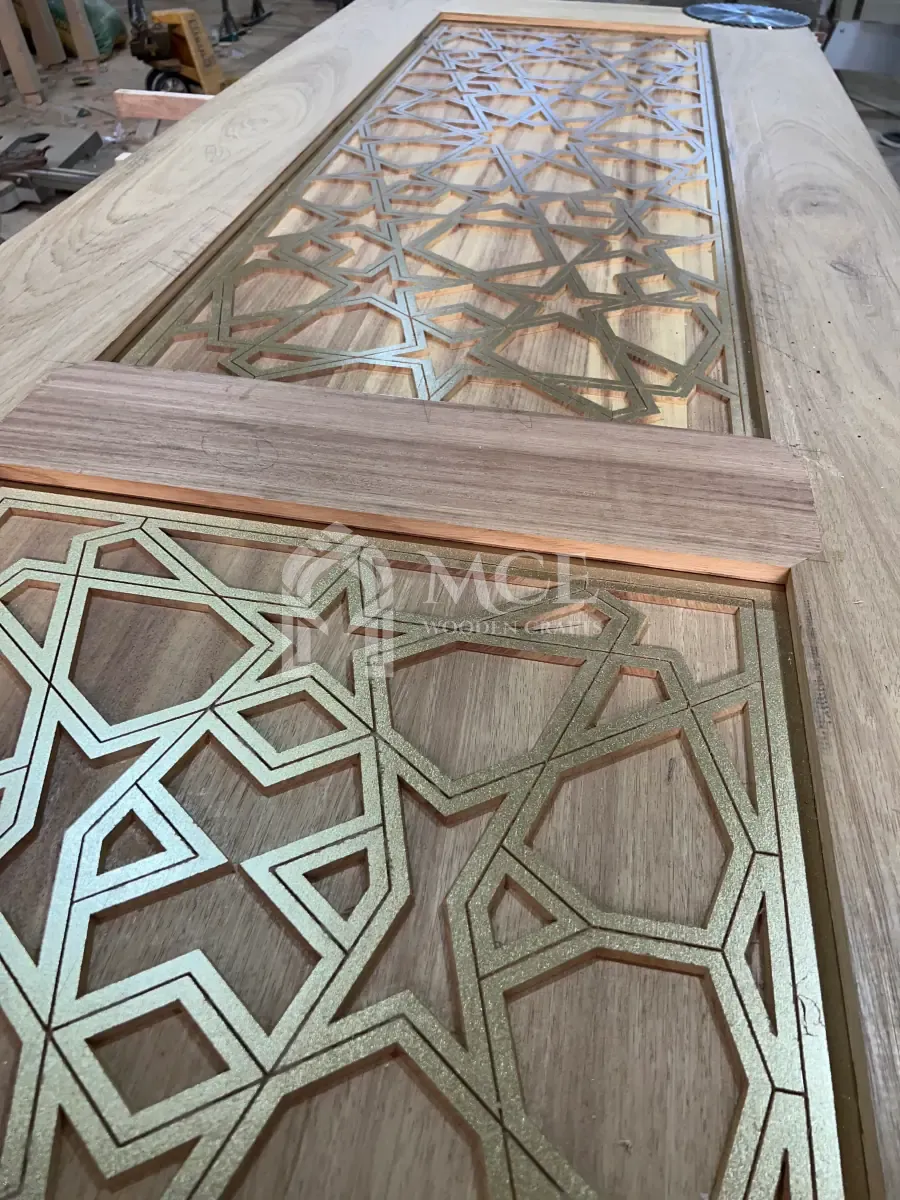
Kundekari is a unique geometric engineering craft brought to wood by Seljuk and Ottoman architecture. Coming to life without metal nails or chemical adhesives, using only custom-cut wooden interlocking pieces, this technique allows the door to breathe naturally during seasonal transitions and humidity changes. This noble solution from centuries ago offers lifetime durability to today's prestigious projects. In MCE workshops, Kundekari is not a retrospective nostalgia, but the most valuable core of our contemporary production discipline.
.webp)
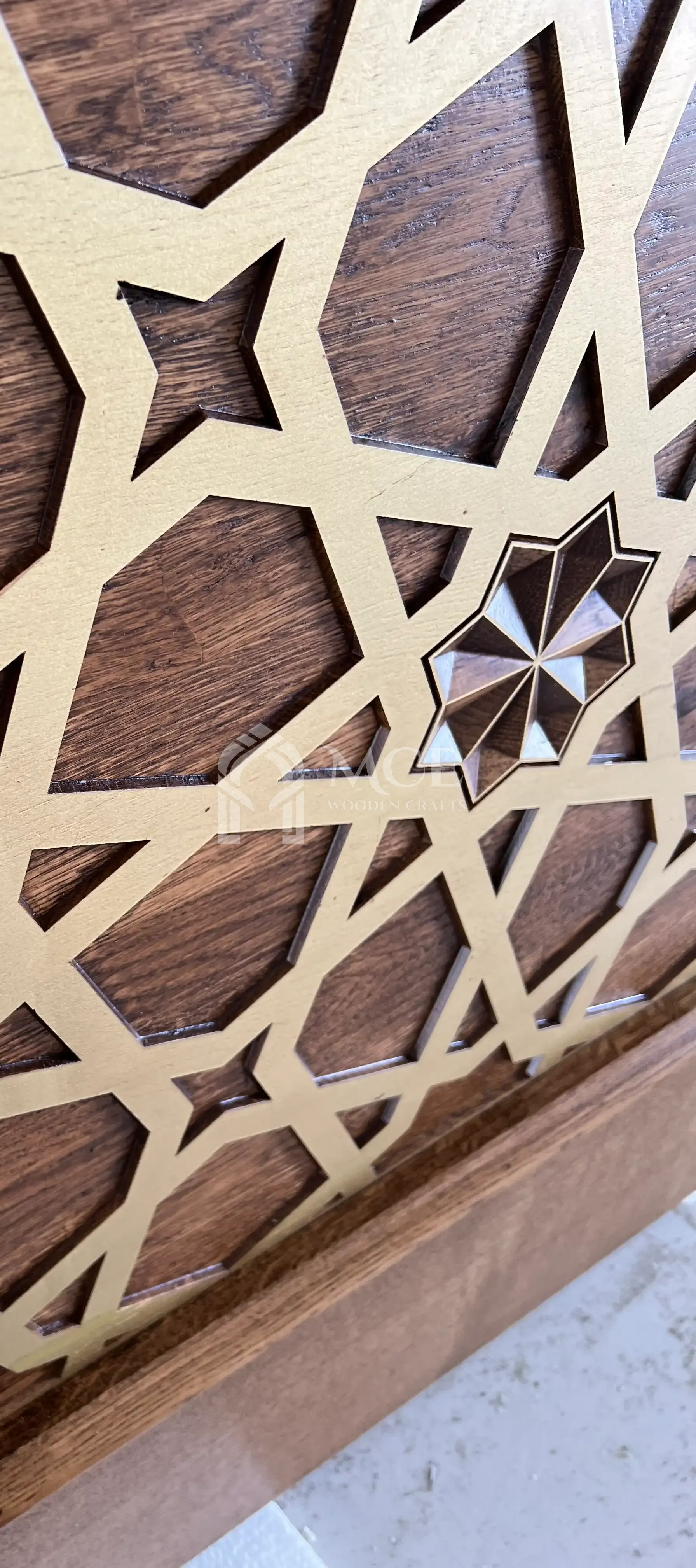
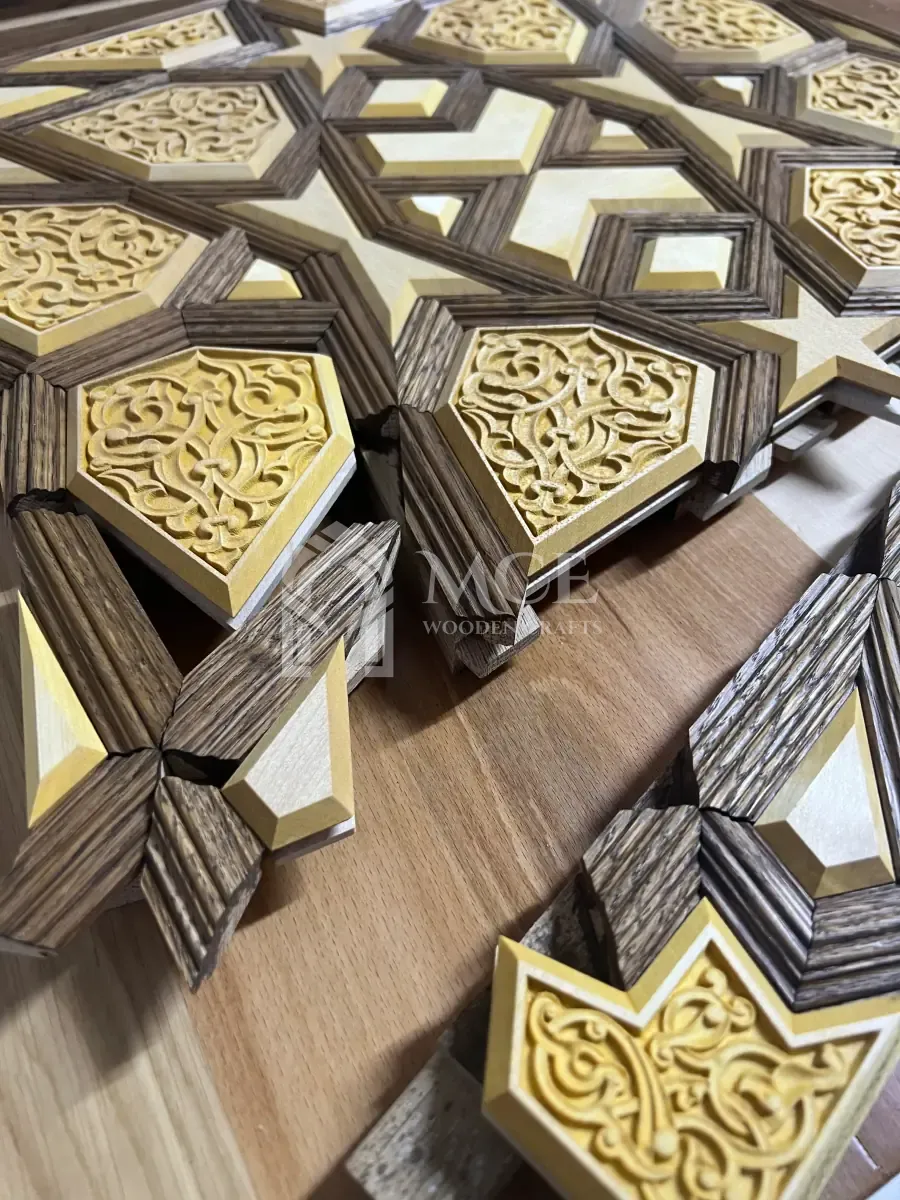
Each piece locks into the adjacent one through its own geometry. No metal fasteners or adhesives are used; the wood's natural response to temperature and humidity is not blocked, but rather becomes a part of the design. The fundamental reason a Kundekari door stands for centuries without cracking is this respectfully designed spacing.
Door height, frame thickness, molding ratio, and light band — all dimensions are solved in the architectural concept, recorded in the workshop book, and preserved from the first day of production to the delivery day. Kundekari is a technique where proportion has no tolerance for error; our workshop makes this precision a reality on-site.
Each door is delivered on-site with its numbered modules, site acceptance book, and maintenance note. The final step is the opening approval: signed when opened with the door owner for the first time. With this ritual, an MCE door ceases to be a simple delivery file and is written into the heritage of the space.
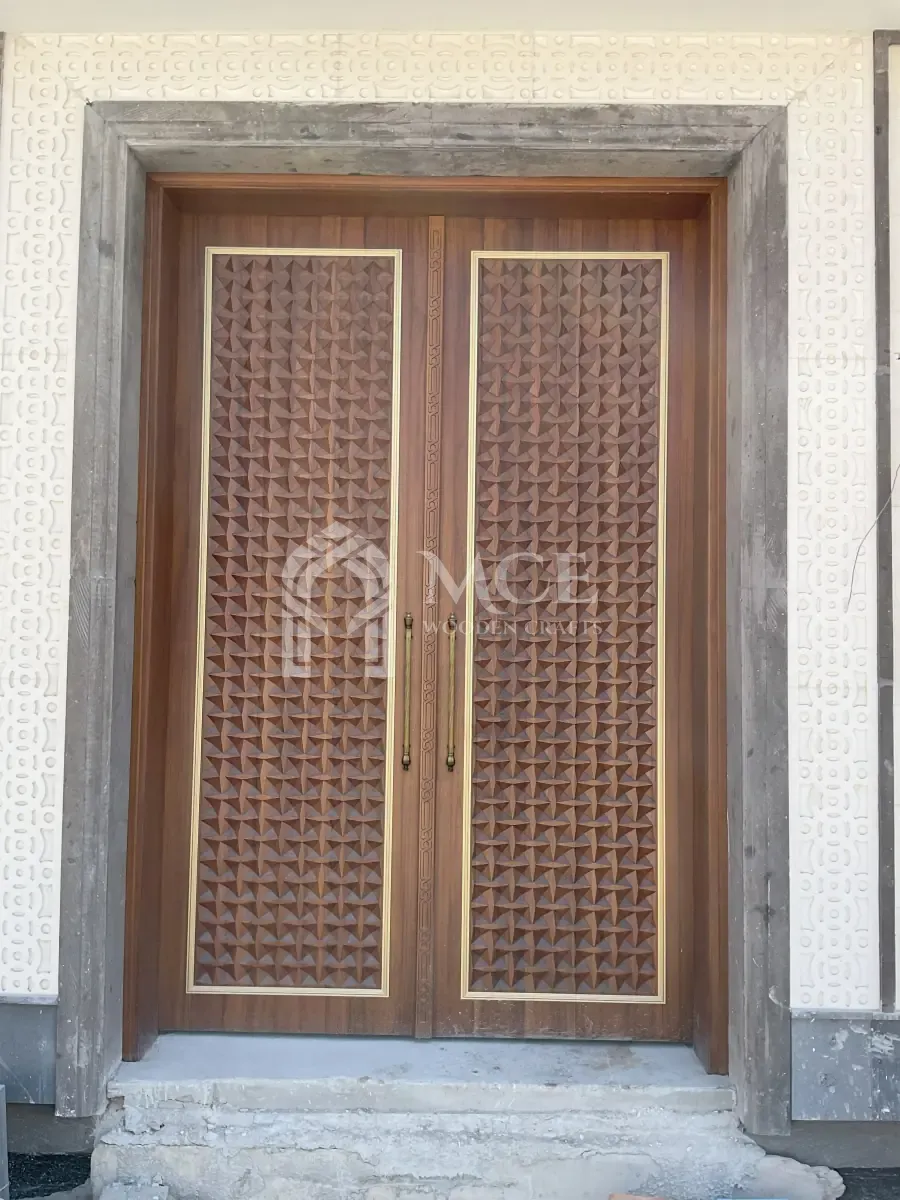
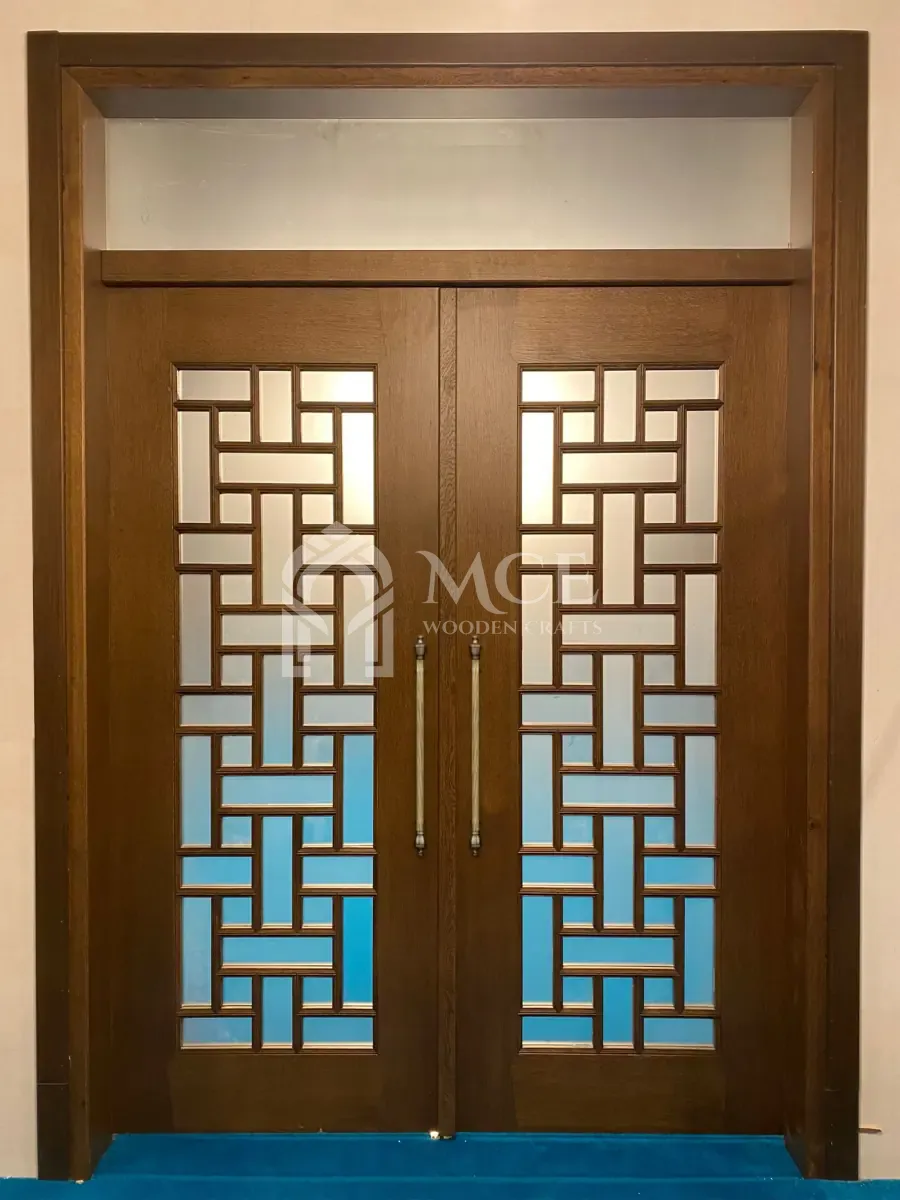
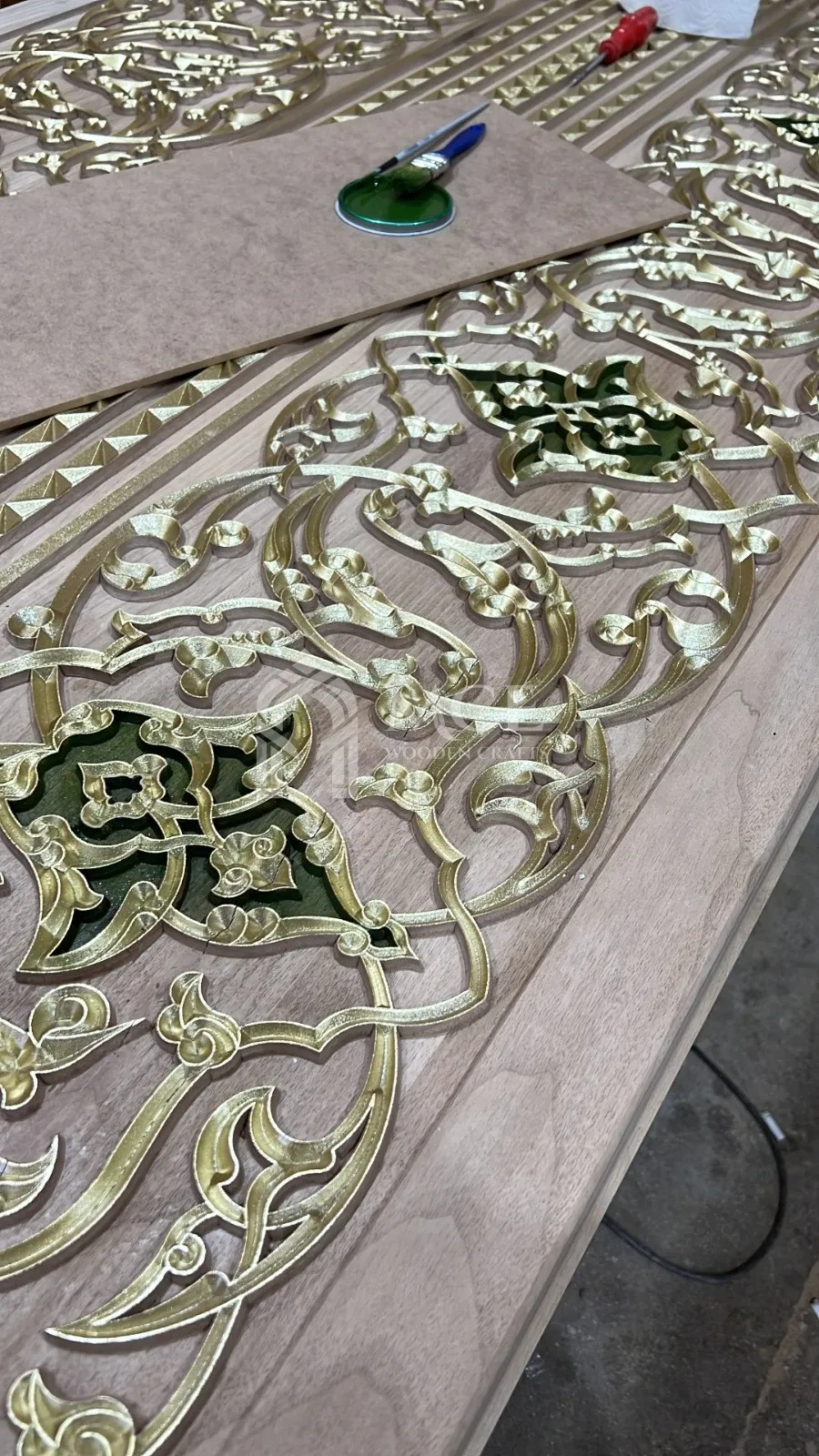
In our Kundekari workshop, every door is a masterpiece recorded in the master's ledger. From carving to filing, from joining to the final touch of the surface, nearly three hundred process steps wait for their turn like an entrusted legacy. Masters first decode the language of the pattern; which piece will match which angle, and how each joint will remain stable while breathing — these are recorded in the workshop book one by one. Kundekari gains meaning when two masters do the same job with the same respect and the result is identical; therefore, there is no place for haste here. At MCE, mastery is born not from speed, but from a precision built over years.
Walnut, oak, mahogany, and teak — each wood type is a distinct character, a separate promise. For a door to be well-crafted, the material must first be chosen carefully: each batch entering the workshop is accepted by the master's hand and eye, considering its origin, age, controlled drying time, and grain direction. Wet grain, incorrect cut, or knotted fiber can be rejected at the workshop threshold — because the Kundekari technique demands uncompromising correctness of the material. In the sample process we run with the architect, the texture and tone matching the project's character are chosen together; each MCE door reaching its owner is the product of a choice that feels familiar when seen for the first time. The material decision is the silent story of a door starting long before the door itself.
The journey of an MCE door starts with the first measurement on-site. Architectural concept drawing, sample approval, production, quality control, special packaging, international logistics, and on-site assembly — each step falls into the same project file and is reported to you weekly. There is a single project manager walking with you through the process; whoever you are—architect, contractor, investor, or end-user—you will find the same contact when you call. Workshop progress photos, site schedule, and delivery program meet in the same ledger; you see every stage of the door before it leaves the workshop. In our logistics line of 28 countries stretching from Europe to the Gulf, we do not accept delays, scattered responsibility, or surprise expenses — because the reputation of a prestigious project is older than its first vibration on site.
Standard
Every door extending from our workshop to the site passes through a three-stage inspection: millimeter measurement fidelity, certified material selection, and Kundekari joint precision. Every step of the production process is documented, and approved technical parameters are recorded in the project's custom archive. For MCE Wooden Crafts, quality is not a promise; it is a written discipline applied every day from workshop to installation.
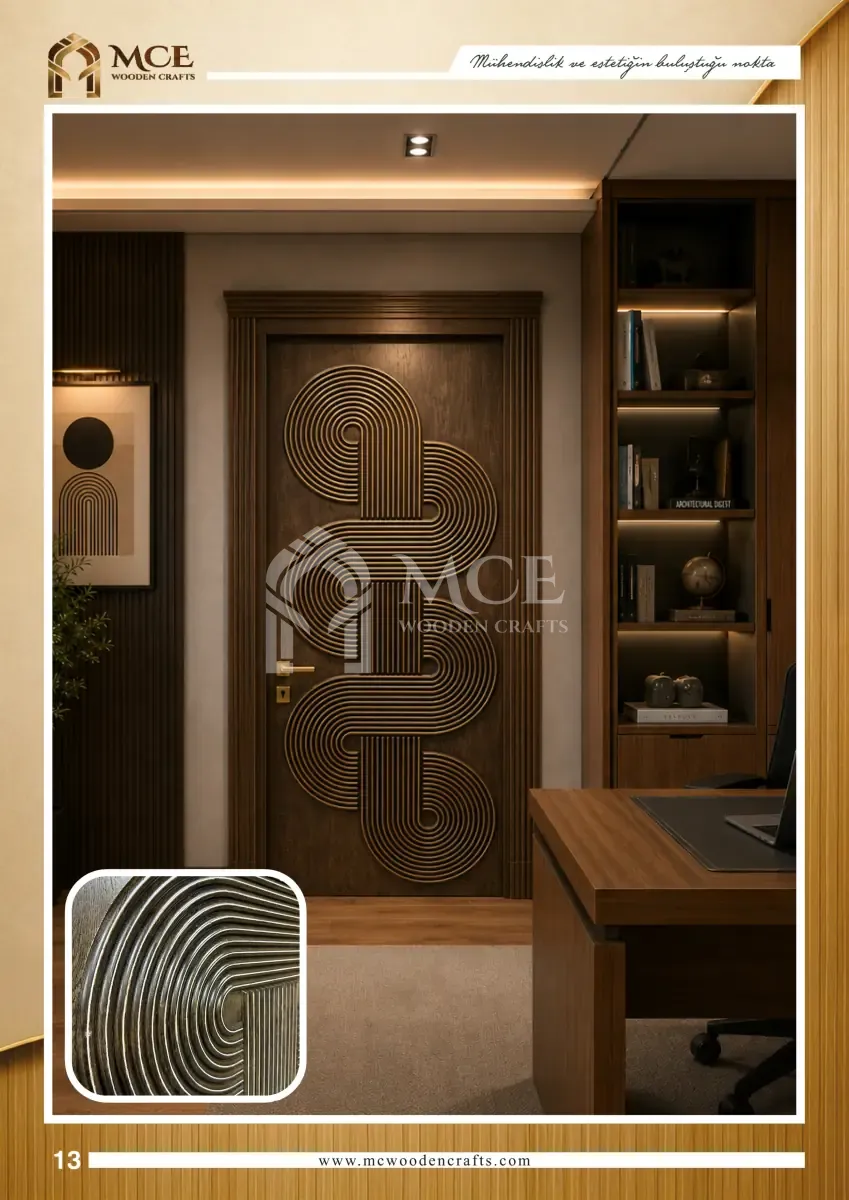
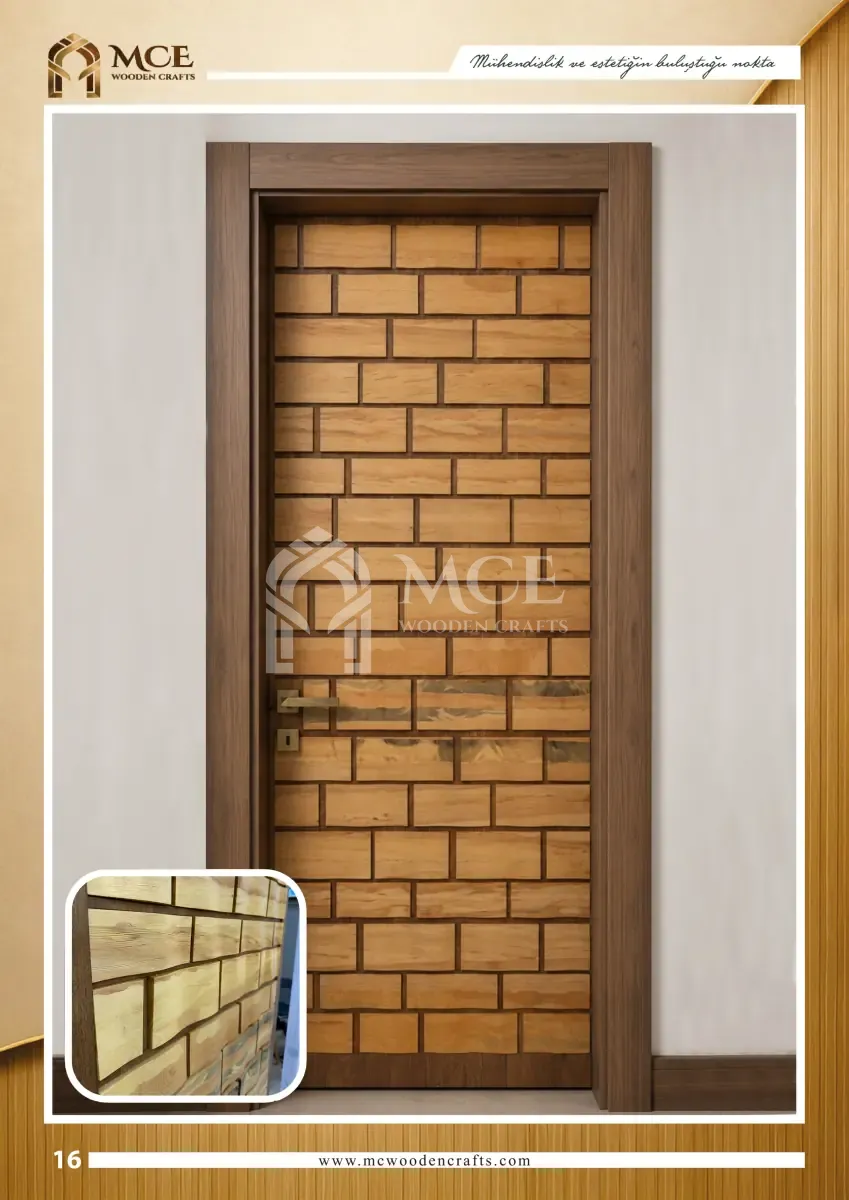
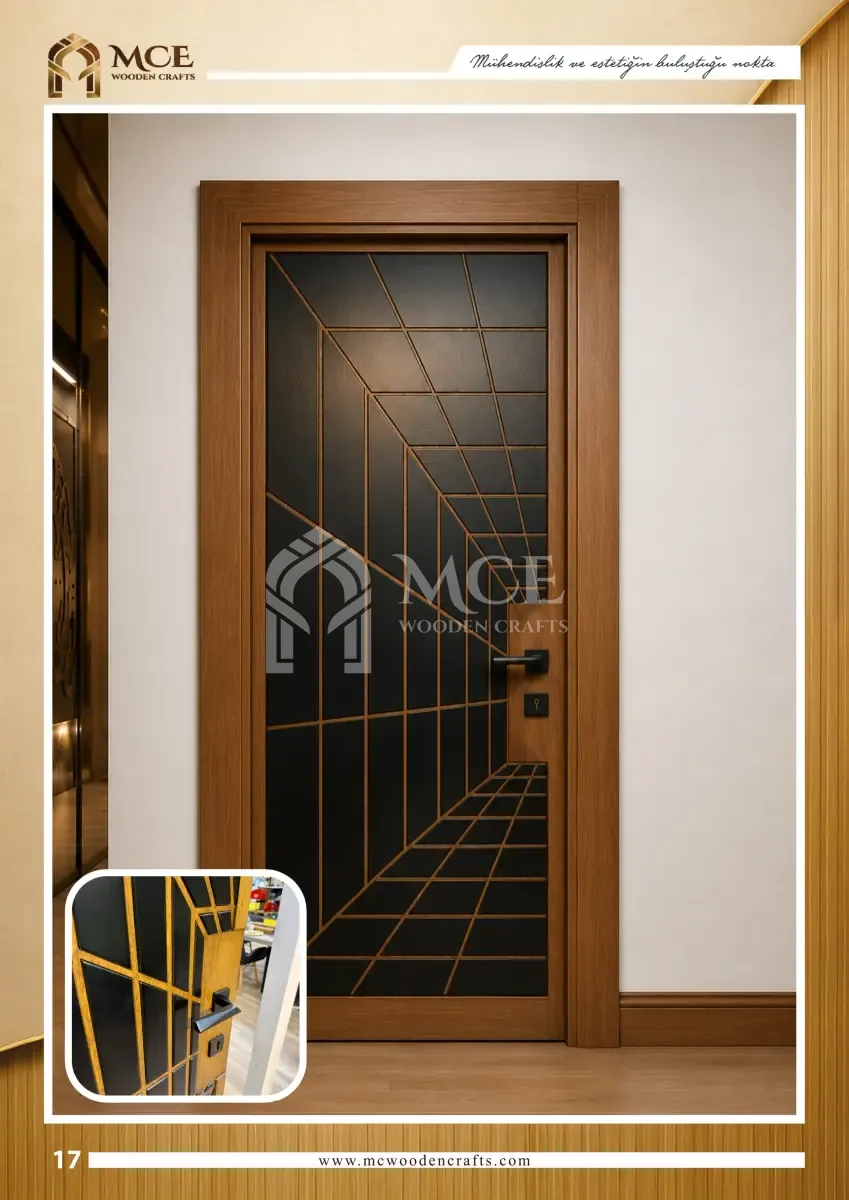
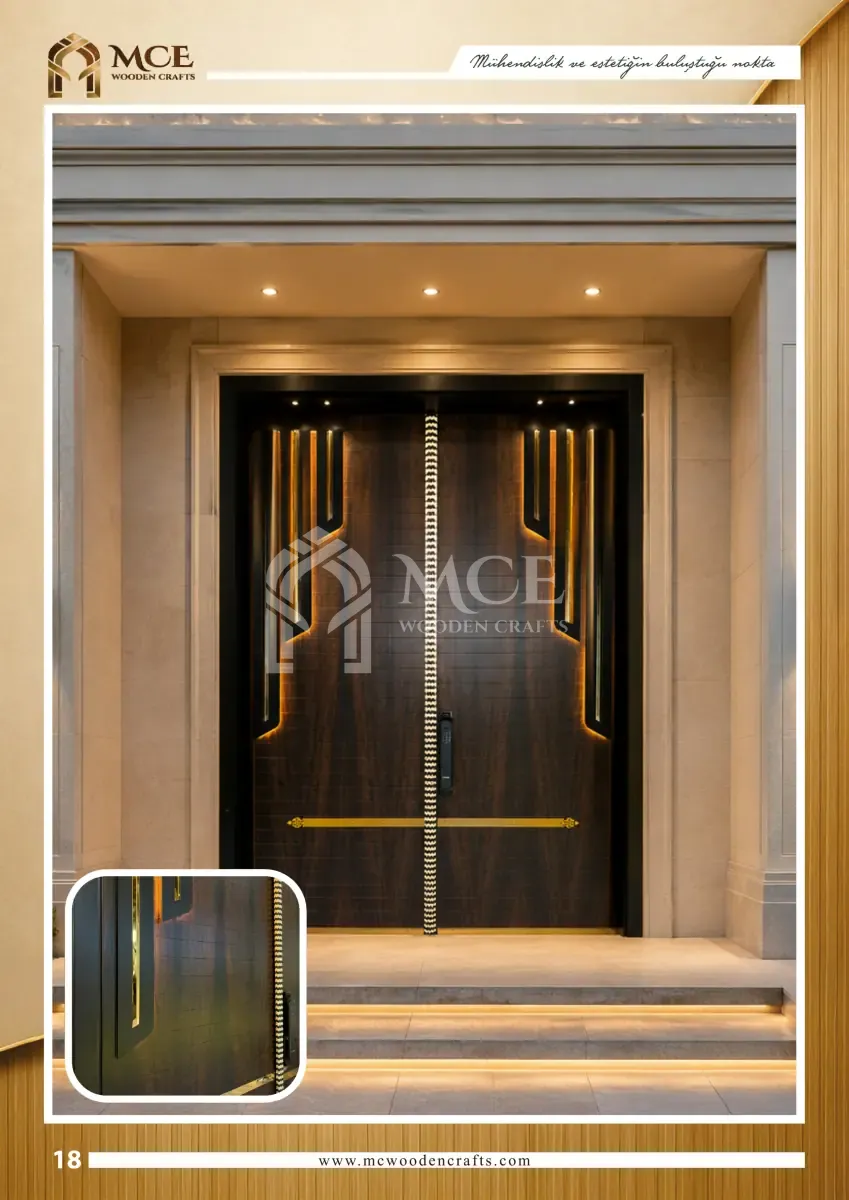
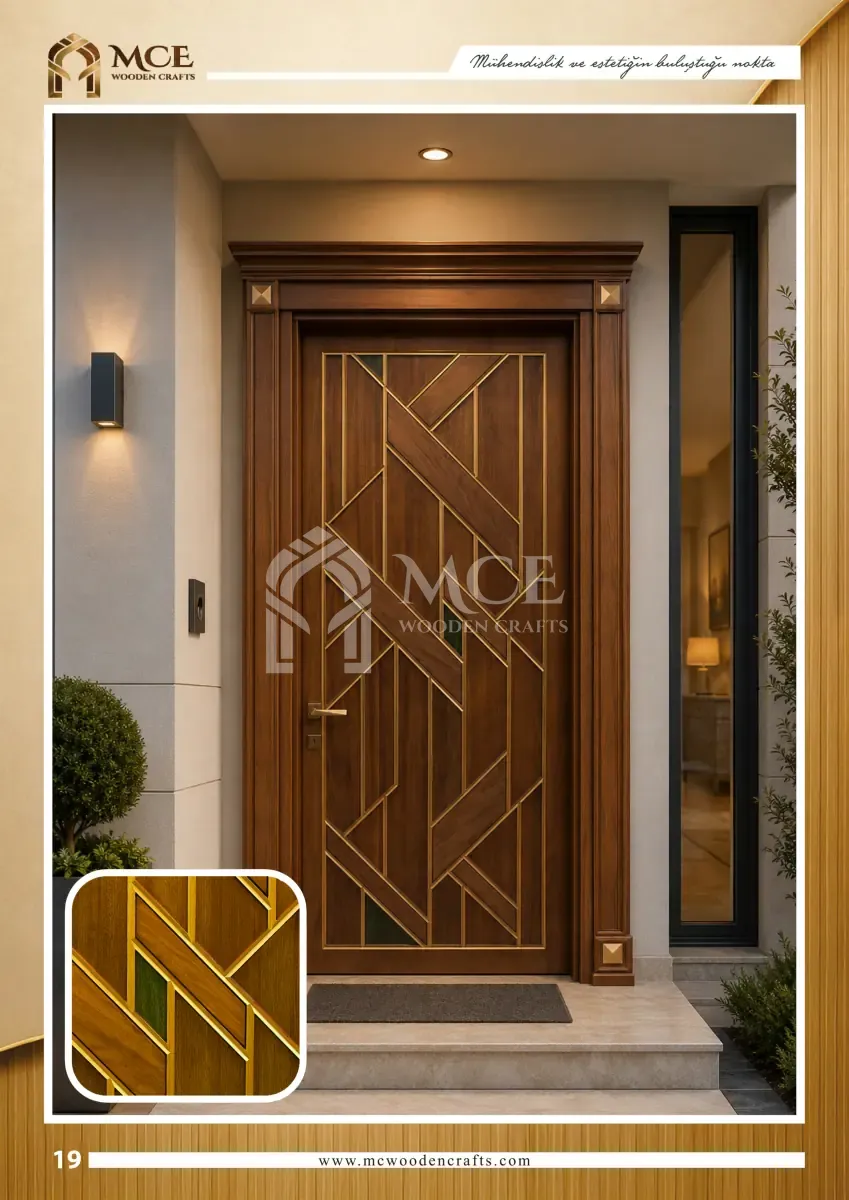
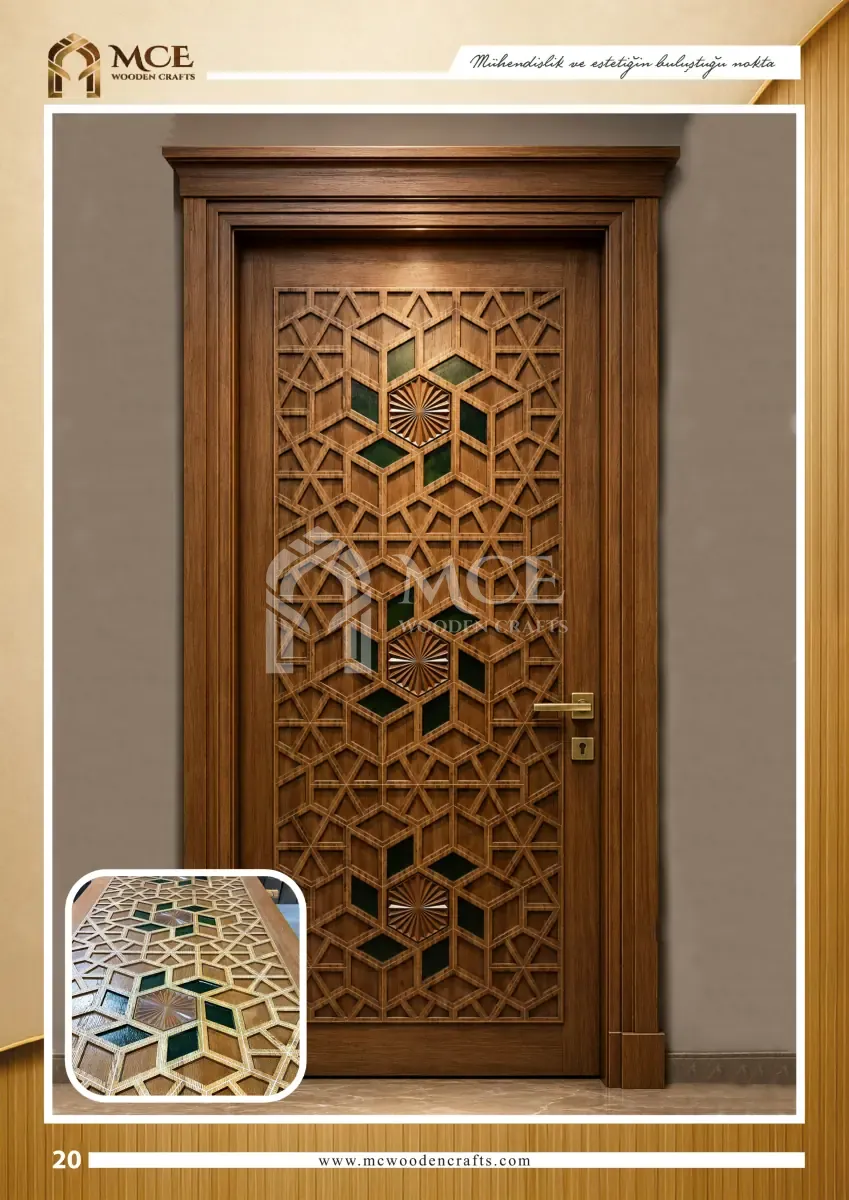
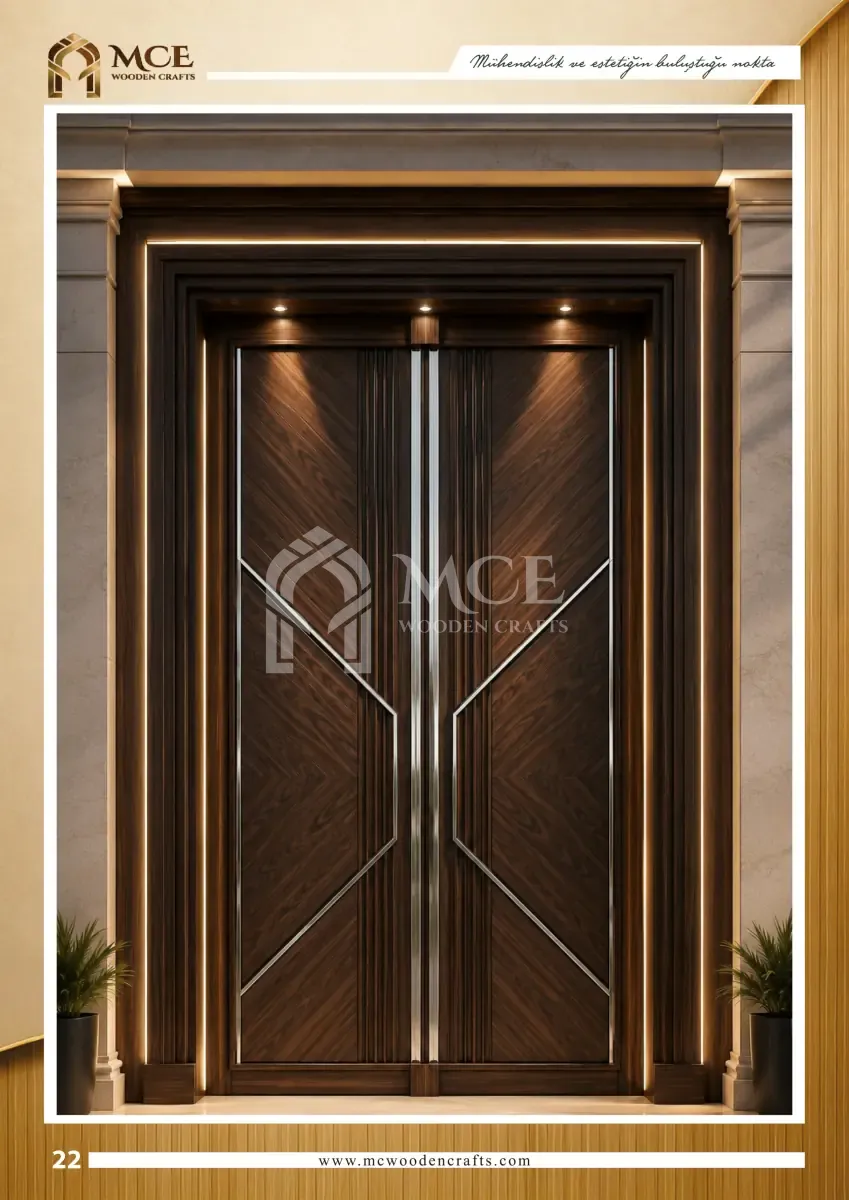
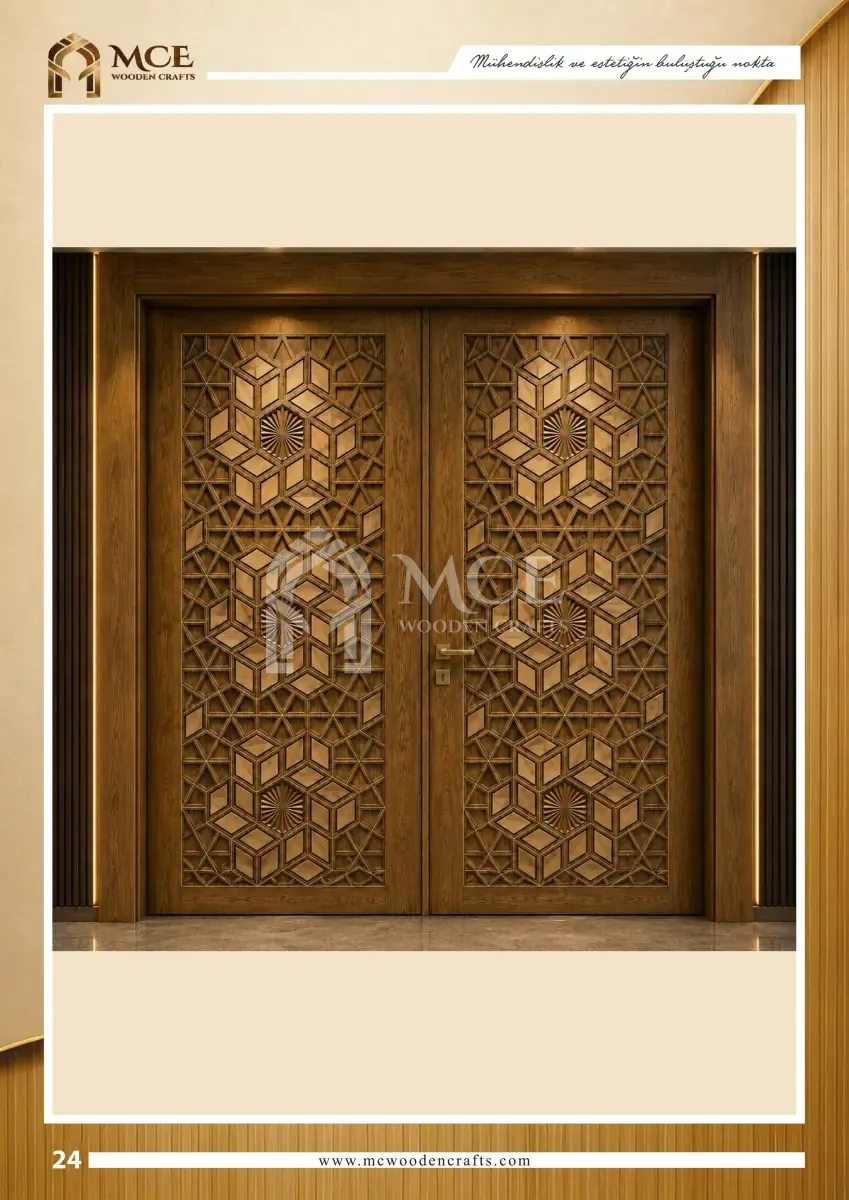
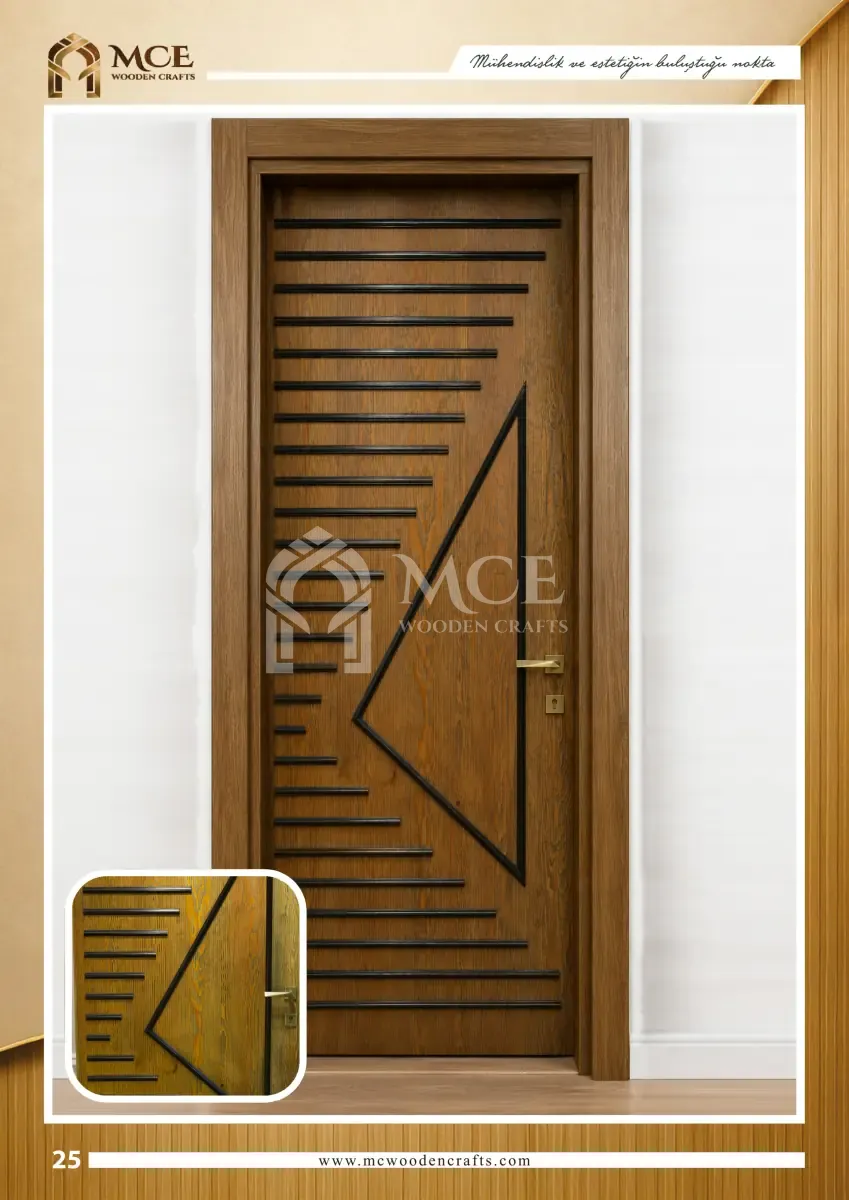
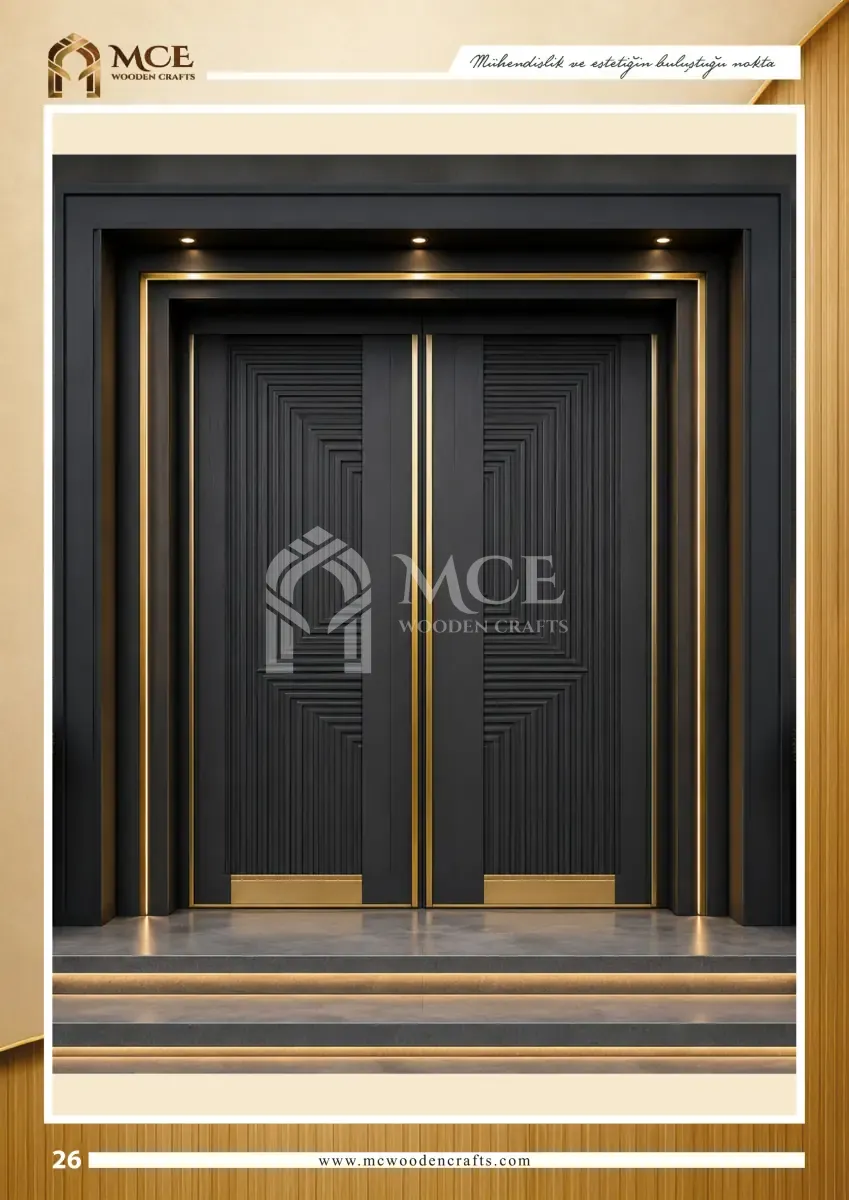
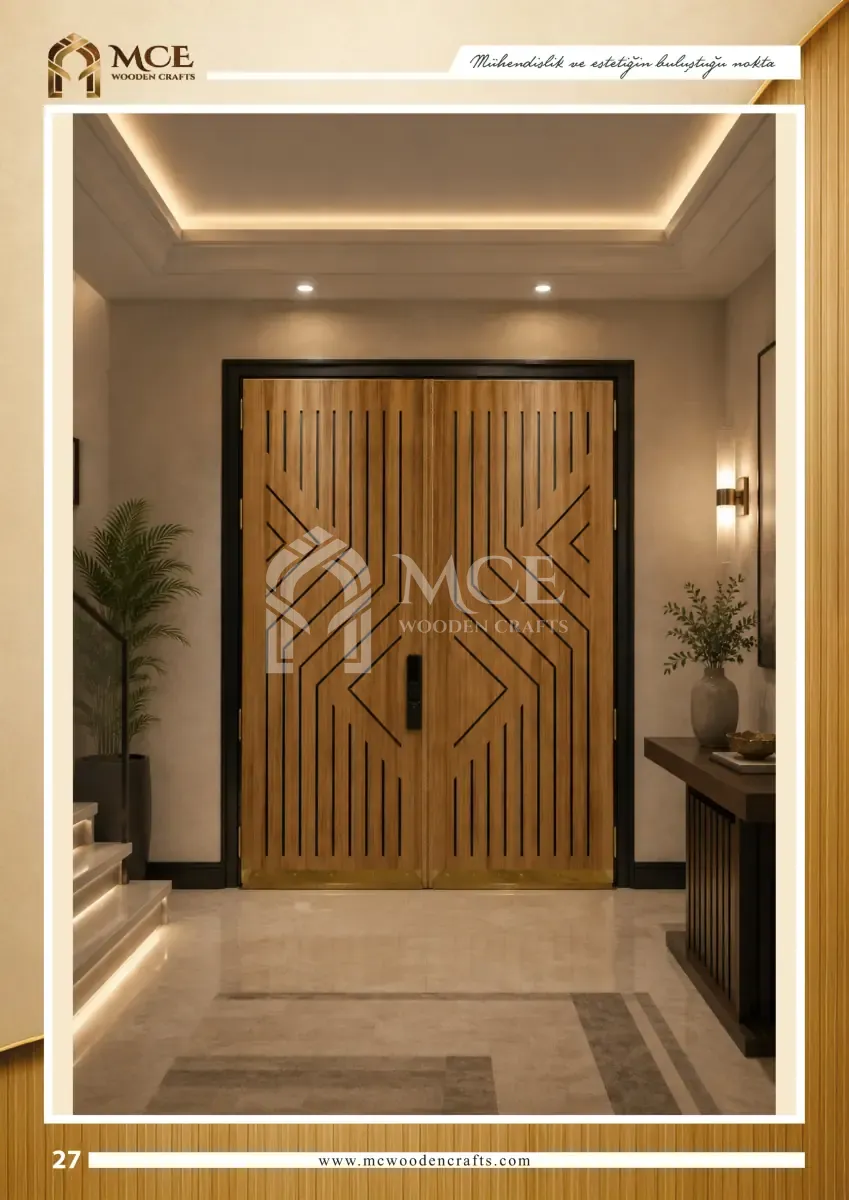
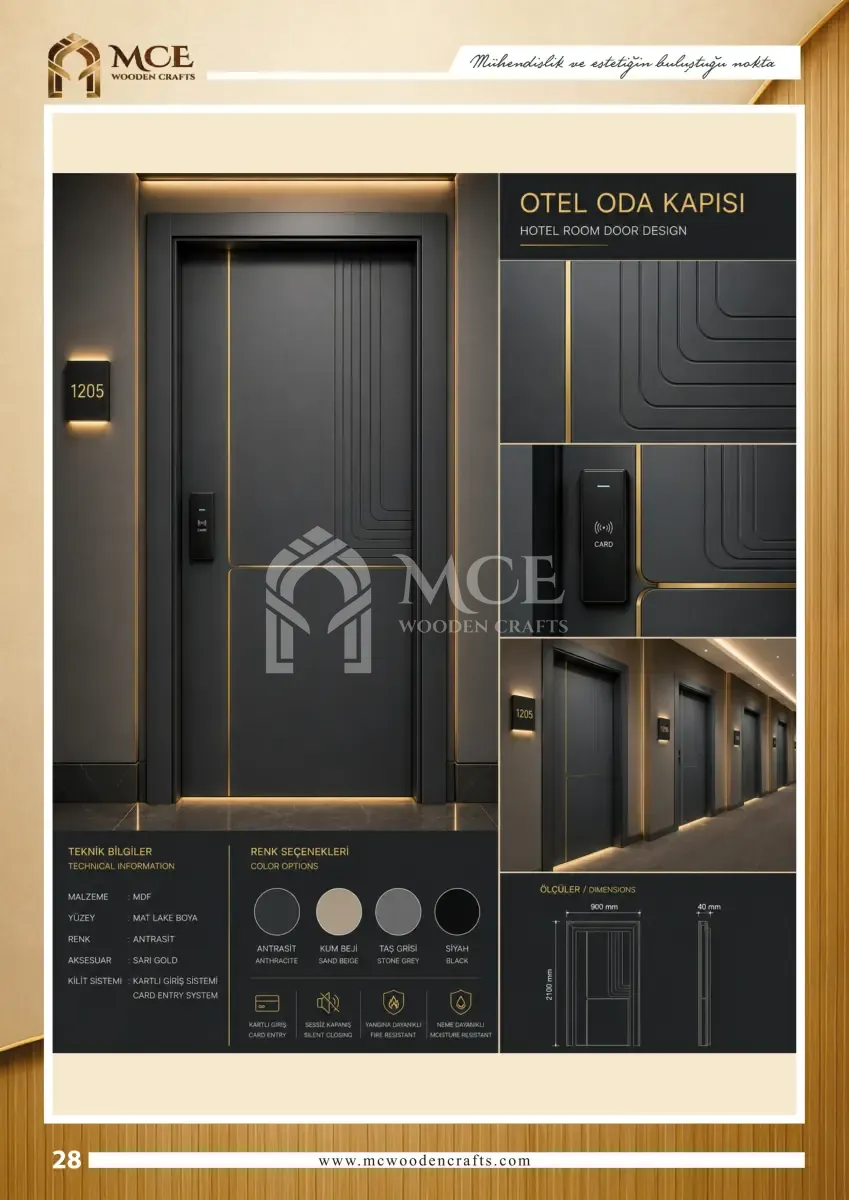
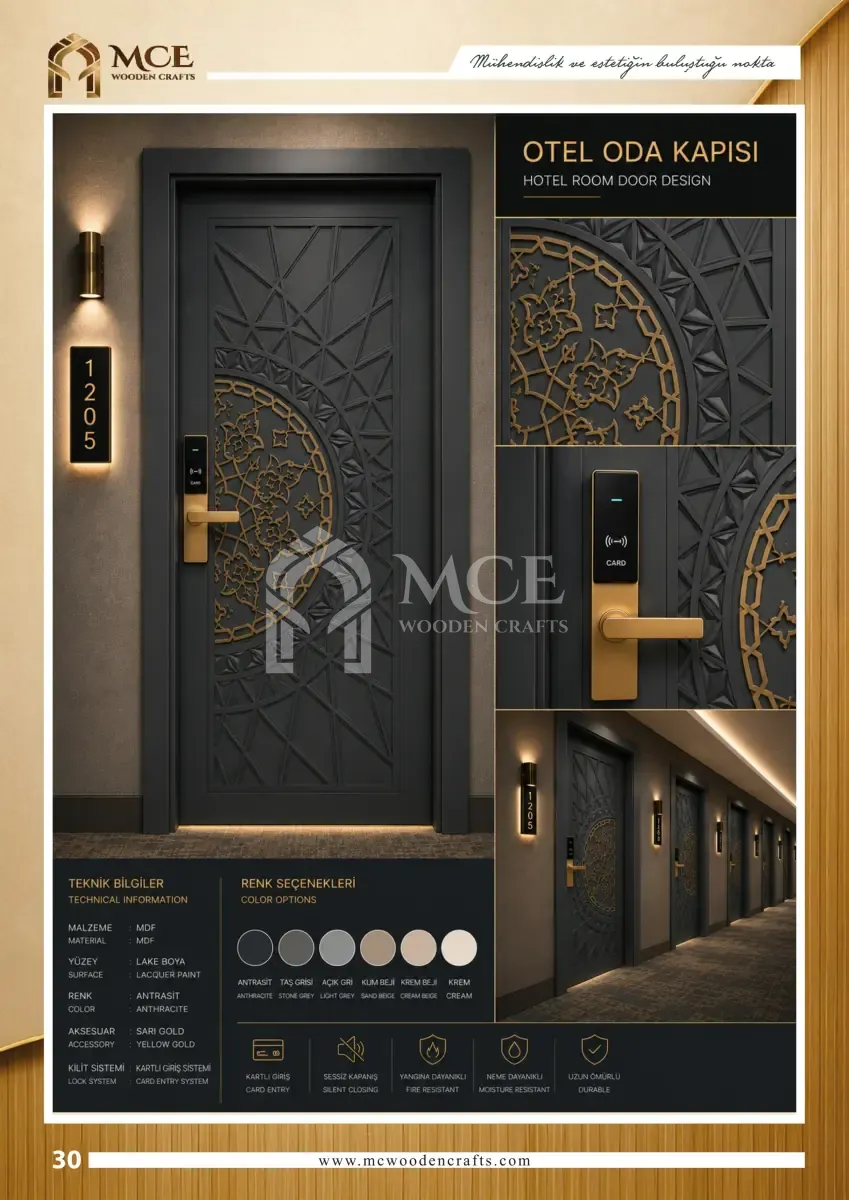
The architectural drawing and the workshop template match with flawless alignment. Each door is produced with millimeter tolerance and verified for the last time on-site before installation.
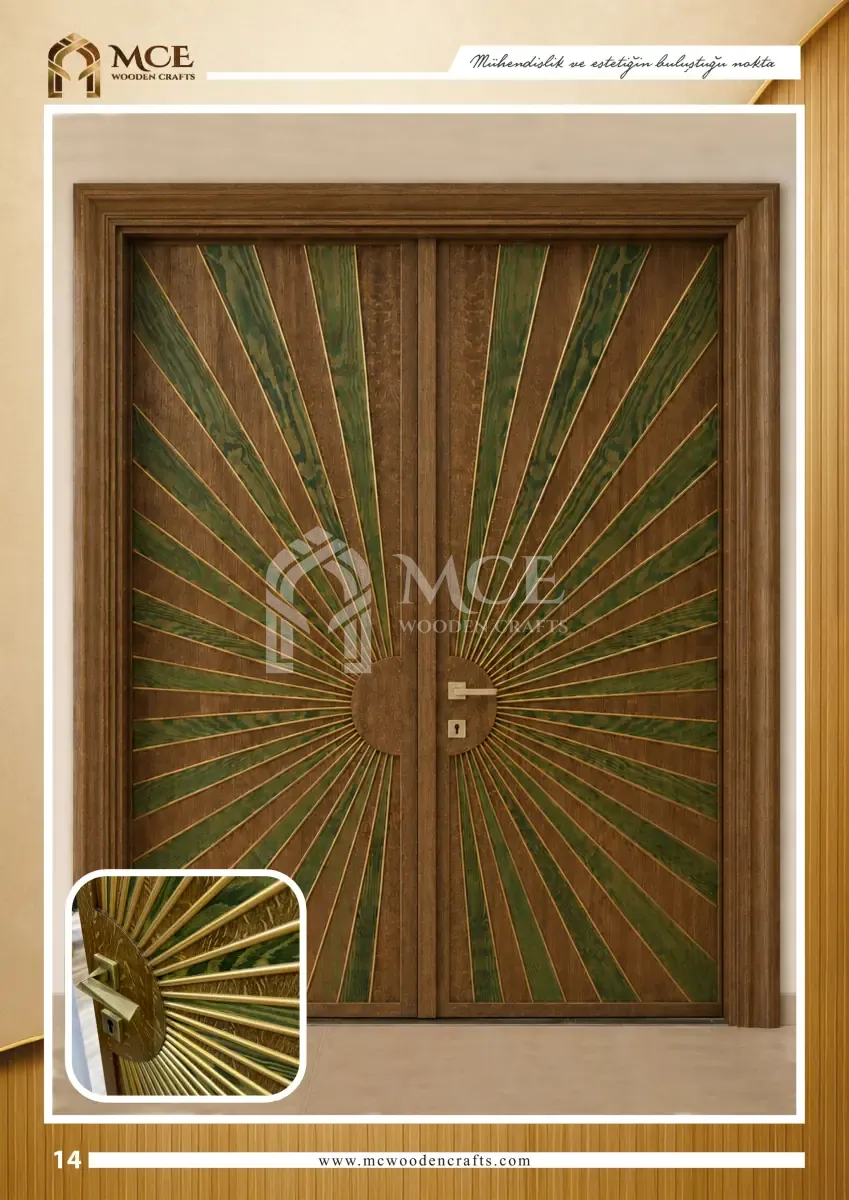
Dimensional PrecisionThe moisture balance, fiber structure, and drying curve of the wood are tested individually. Only select timbers that successfully pass these tests are accepted into the Kundekari technique.
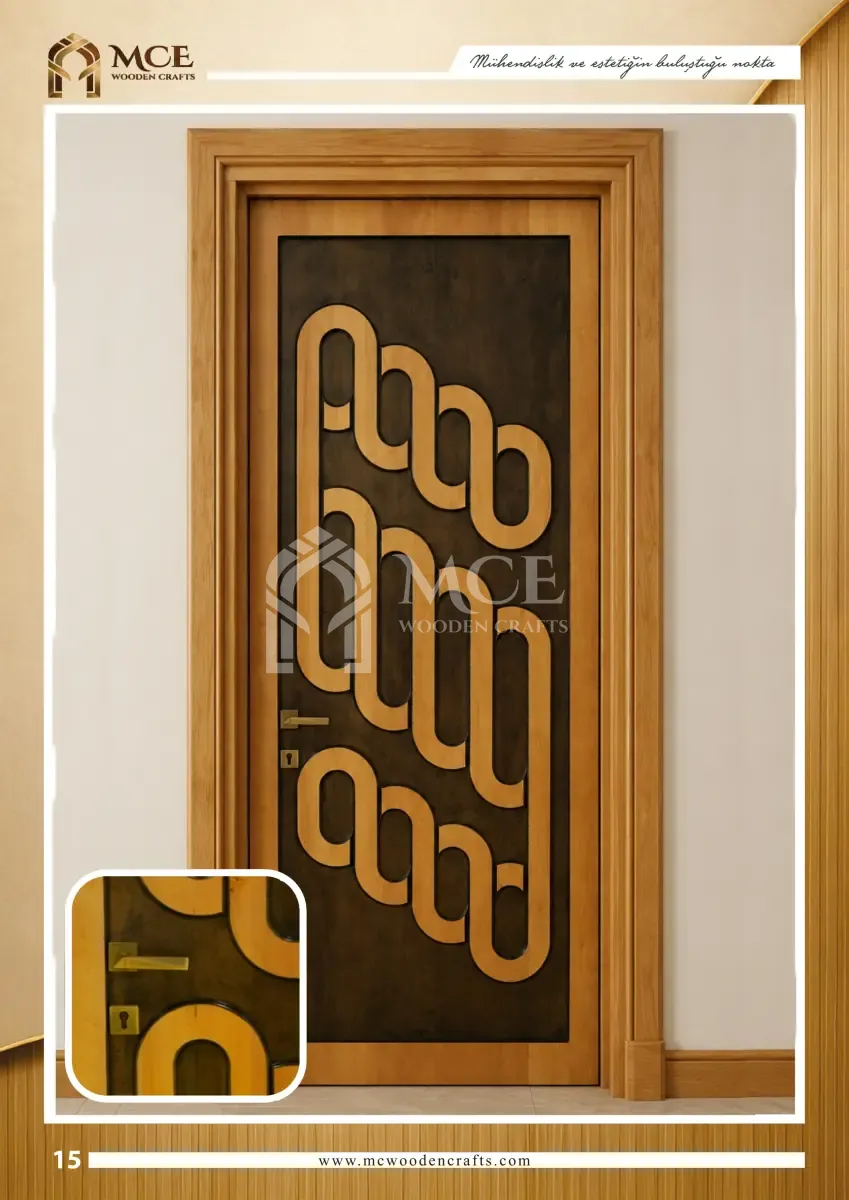
Certified SelectionWhen the installation process is finished, final checks are carried out in the presence of our project manager. The maintenance guide and quality certificate are handed over to the door owner with a ceremony.
Site ClosingPartnership
From our workshop in Konya to architectural projects, prestige construction, and private residences, the same ledger, the same line of responsibility. Each team below is a set of business partners with whom we carry out the process from drawing language to site signature.
We progress in alignment with architectural, structural, and detailed drawings. A single project manager in revisions, details, and consumption; the door line is not a subcontractor, but a part of the project.
Production flow, shipment, and assembly coordination in accordance with the site schedule. Customs and logistics are gathered under the same MCE responsibility in every possible project.
Entrance dimensions true to the relationship of passage, light, and furniture. Texture, color harmony, and ornamentation language matching the mihrab are integrated at the same table as the workshop.
The same manufacturing discipline in high traffic, protocol, and religious decoration requirements. Reference language is clear; delivery is documentable and repeatable.
Daily contact of the end-user, maintenance life, and noise-reducing joinery. The residence meets the same line as the first impression on-site with workshop precision.
English and Arabic project interface, delivery rhythm extending to 28+ countries. Remote approval, numbering, and site opening: single reference, single ledger.
The next entrance line
Drawing, discovery, or just the vision stage; early meeting is the most efficient step for the right match. Our workshop team brings your measurement and ornamentation language to the same table.